Schlumberger
Schlumberger is a company.
Active
Updated: ·
Financial History
Total Raised
N/A
Valuation
N/A
Leadership Team
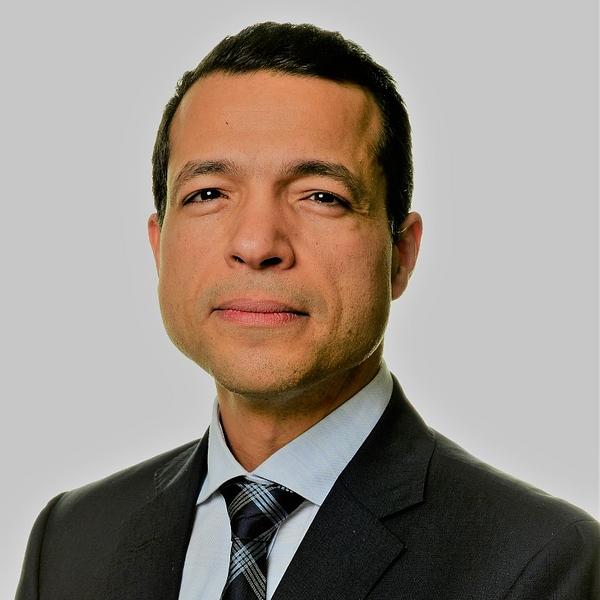
Key people at Schlumberger.

Schlumberger is a company.
Key people at Schlumberger.
Schlumberger (now SLB) is a global technology company providing critical services to the energy industry, primarily focused on oilfield operations including seismic data processing, formation evaluation, well testing, directional drilling, well cementing, stimulation, artificial lift, well completions, flow assurance, consulting, and software management.[2][3] It also engages in groundwater extraction and carbon capture and storage, serving major petroleum companies worldwide by enabling efficient exploration, production, and reservoir management in challenging environments.[2][4] With a history of innovation dating back nearly a century, the company has grown into one of the largest oilfield service providers, employing tens of thousands across diverse operations and maintaining a strong emphasis on research and development.[1][4]
Schlumberger traces its roots to 1926 in Paris, France, when brothers Conrad and Marcel Schlumberger, from an Alsatian family with scientific interests, founded the Electric Prospecting Company (Société de Prospection Électrique) to apply electrical resistivity methods for detecting underground resources.[1][2][5] Conrad, a physicist who developed the core technique in the 1910s by measuring ground resistivity variations, and Marcel handled business operations; their father Paul provided initial financing, with early work including patents and surveys in Romania by 1923.[4][5] The breakthrough came in 1927 with the first electrical resistivity well log in Merkwiller-Pechelbronn, France, revolutionizing oil exploration by mapping reservoirs more cheaply and reliably than traditional coring.[1][3][5]
Pivotal early expansion followed: logging the first U.S. well in California's Kern County in 1929, establishing Schlumberger Well Surveying Corporation in Houston in 1934 (which became the company's most profitable unit), and entering markets like Japan by 1936.[1][2] Despite challenges like World War II and Conrad's death in 1936, the company invested in the Schlumberger-Doll Research Center in 1948, listed on the NYSE in 1962, and pursued acquisitions like Dowell (1960) and SEDCO (1984), evolving into a multinational powerhouse headquartered in Curaçao with offices in Paris, Houston, London, and elsewhere.[2][3][4]
Schlumberger rides the wave of energy transition and digital transformation in oil & gas, where aging fields, deepwater challenges, and net-zero pressures demand advanced tech for efficiency and lower emissions.[2] Its timing capitalized on post-WWII oil booms and 20th-century exploration surges, positioning it as a key enabler amid market forces like geopolitical supply shifts and tech convergence (e.g., AI-driven seismic analysis, software for flow assurance).[3] The company influences the ecosystem by setting standards in well logging—still foundational—and fostering diversity through local hiring, while acquisitions integrated drilling and pumping, reducing operator reliance on fragmented services.[1][4] In a broader tech context, its early innovations in data links and meters prefigured Industry 4.0 applications in energy.[1][2]
Schlumberger's next phase centers on sustainable energy tech, expanding carbon capture, groundwater solutions, and digital platforms amid volatile oil demand and renewables push—trends like electrification and AI optimization will amplify its reservoir intelligence edge.[2] Influence may evolve toward integrated energy systems, partnering on hydrogen or geothermal, building on its R&D legacy to navigate decarbonization. From revolutionizing a single well log nearly a century ago, SLB remains the frontier force in energy innovation.[3][5]
Key people at Schlumberger.