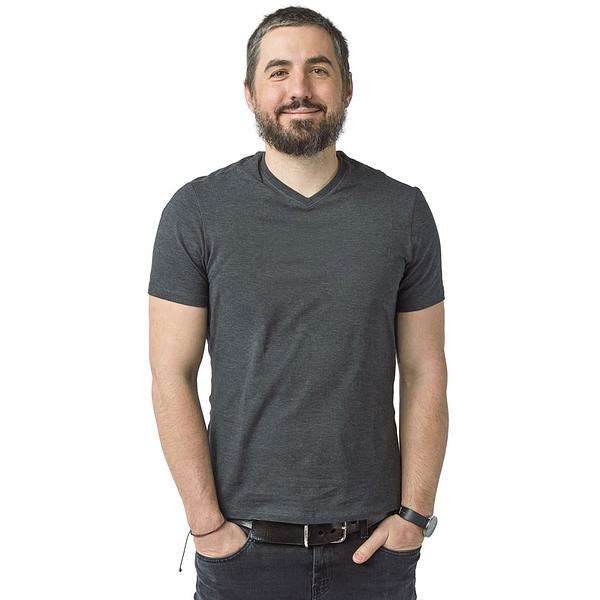
Digg is a human‑first social news and community platform that aggregates and curates internet content, recently relaunched under founder Kevin Rose and Reddit cofounder Alexis Ohanian to blend editorial curation, community features, and AI-assisted moderation for mobile-first discovery and conversation[2][3].[4]
High‑Level Overview
- Concise summary: Digg began as a social bookmarking/news‑aggregation site that let users submit and vote on links; after a major decline following a 2010 redesign and a period under Betaworks, the brand was reacquired in 2025 by Kevin Rose and Alexis Ohanian and relaunched as an invite‑only, human‑centered community platform that uses both editors and AI tools to surface and moderate high‑quality content[2][3][4].[2][3][4]
- For an investment firm (N/A): Digg is not an investment firm; it is a technology/media company that operates a content and community platform[2][4].[2][4]
- For a portfolio company (product & audience): Digg builds a curated discovery and community product that serves consumers who want a human‑curated feed of high‑quality internet content and publishers seeking referral traffic; its approach aims to solve content noise and bot-driven low‑quality amplification by combining human editors with machine tools to improve relevance and safety on mobile devices[4][3].[4][3]
- Growth momentum: Since the 2025 reacquisition, Digg has been rebuilt as an invite‑only, mobile‑focused product with a relaunch led by Rose and Ohanian and new leadership (Justin Mezzell as CEO), signaling renewed investment and interest in reestablishing audience and product-market fit[2][3][4].[2][3][4]
Origin Story
- Founding and early years: Digg was founded in 2004 by Kevin Rose, Owen Byrne, Ron Gorodetzky, and Jay Adelson as a social bookmarking/news aggregator that let users submit links and vote them up (“digg”) or down (“bury”), quickly growing into a widely used site that drove large traffic volumes to publishers[2].[2]
- Decline and ownership changes: A poorly received redesign in 2010 led to a mass exodus of users to rivals (notably Reddit), and the company was sold to Betaworks in 2012, after which Digg operated more as an editorially curated site for over a decade[2].[2]
- 2025 reacquisition and reboot: In March–June 2025 Kevin Rose and Alexis Ohanian bought Digg back, named Justin Mezzell CEO, and announced a relaunch focused on mobile, human curation plus AI tools for moderation and discovery; the founders framed the effort as building a “site for humans” in an era where bot‑generated content and AI noise have become major problems[2][3][4].[2][3][4]
Core Differentiators
- Human + machine moderation and curation: Digg’s relaunch emphasizes an editorial team working alongside AI tools to surface quality content while combating bot-driven and low‑quality material[3][4].[3][4]
- Founding pedigree and leadership: The involvement of Kevin Rose (original founder) and Alexis Ohanian (Reddit cofounder and prominent investor) provides credibility, product experience, and a public profile that can accelerate user trust and media attention[3].[3]
- Mobile‑first, invite‑only rollout: The rebuilt product targets mobile discovery and initially uses an invite‑only model to control onboarding, community composition, and product feedback loops[4].[4]
- Focus on authenticity and community: Public positioning stresses “humanity at the core” and building authentic community connections rather than maximizing scale at all costs[4][3].[4][3]
Role in the Broader Tech Landscape
- Trend alignment: Digg is riding several converging trends — user fatigue with algorithmic and bot‑driven feeds, renewed interest in community‑centric social products, and the need for human oversight in the AI era — positioning it to appeal to users seeking quality and trust[3][4].[3][4]
- Timing: After years of platform fatigue and increased public attention on content moderation challenges, a human‑centered, mixed human/AI moderation model addresses current market concerns about trust and safety in social products[3].[3]
- Market forces in its favor: Persistent demand for high‑quality discovery, publisher interest in reliable referral traffic, and investor/creator appetite for “values‑aligned” platforms (a theme cited by Ohanian from his VC work) support Digg’s relaunch thesis[3].[3]
- Influence: If successful, Digg could nudge other aggregator and community platforms to prioritize human curation and more transparent moderation models, and it may serve as a test case for hybrid human‑AI content flows on mobile discovery platforms[3][4].[3][4]
Quick Take & Future Outlook
- What’s next: Near term Digg will focus on growing a healthy invite‑first community, iterating its human+AI moderation stack, and proving it can drive meaningful engagement and publisher traffic at scale under the new product model[4][3].[4][3]
- Trends that will shape the journey: Effectiveness of hybrid moderation against generative‑AI noise, user retention in invite/curated communities, and the economics of driving reliable publisher referrals will determine success; regulatory and public scrutiny around content platforms will also constrain choices[3][4].[3][4]
- How influence might evolve: If Digg regains a sizable, engaged audience, it could become a differentiated alternative to purely algorithmic feeds and a model for balancing editorial judgment with automation; if it fails to scale or monetize, it may remain a niche editorial product[3][4].[3][4]
Final quick tie‑back: Digg’s relaunch is an intentional return to its roots—human curation and community—updated for a post‑AI, mobile‑first era; its success will hinge on executing a credible human+AI moderation model while rebuilding trust and scale under experienced founders[2][3][4].[2][3][4]