Capgemini Consulting
Capgemini Consulting is a company.
Active
Updated: ·
Financial History
Total Raised
N/A
Valuation
N/A
Leadership Team
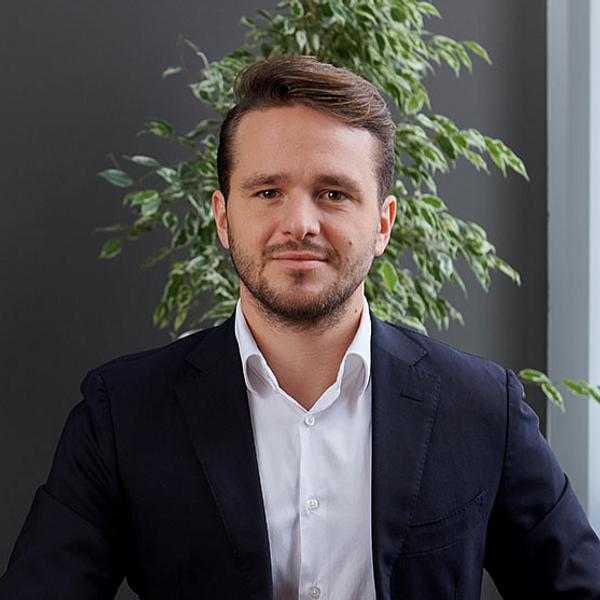
Key people at Capgemini Consulting.

Capgemini Consulting is a company.
Key people at Capgemini Consulting.
Capgemini is a global leader in consulting, technology services, digital transformation, and engineering, operating in over 50 countries with more than 350,000 employees. It provides strategy, transformation, operational consulting, technology services, digital services, operations, and engineering across key industries like financial services, consumer products, healthcare, telecommunications, and manufacturing.[5][6] The company drives client value through innovation, including Capgemini Invent—a consulting and design arm launched in 2018 with around 10,000 employees—and partnerships like its 2021 collaboration with IBM on quantum computing.[1][2]
Capgemini's scale supports diverse career opportunities and global assignments, earning recognition as one of the World's Most Ethical Companies for ten years and a top consulting firm by Forbes. In 2024, it reported €22.096 million in revenues with a 13.3% operating margin, reflecting steady growth fueled by acquisitions and adaptation to tech trends.[3][5]
Capgemini traces its roots to October 1, 1967, when Serge Kampf, a French entrepreneur with a sales background and aversion to computers, founded Société pour la Gestion de l'Entreprise et le Traitement de l'Information (Sogeti) in Grenoble, France—a provincial city choice that set it apart in the IT services sector.[1][2][3] Sogeti initially focused on enterprise management and data processing, growing through early acquisitions like rival Solame in 1970.[3]
Pivotal moments included the 1974 acquisition of U.S.-based Gemini Computer Systems and 1975 acquisition of CAP (Centre d'Analyse et de Programmation), leading to a rebrand as CAP Gemini Sogeti after resolving a naming dispute.[1][3][6] U.S. entry followed in 1981 via Milwaukee's DASD Corporation.[1][2][6] The company went public in 1988, acquired UK's Hoskyns Group in 1990, simplified to Cap Gemini in 1996, merged with Ernst & Young Consulting in 2000 (forming Cap Gemini Ernst & Young), rebranded fully to Capgemini in 2004, bought iGate for $4 billion in 2015, and acquired Altran in 2019—its largest deal—to bolster engineering.[3][5]
Capgemini rides the wave of digital transformation and AI-driven consulting, capitalizing on market forces like rising demand for cloud, cybersecurity, and quantum applications amid enterprise tech adoption.[1][5] Its timing aligns with post-2020 acceleration in hybrid work, sustainability tech, and regulated industries' need for compliant innovation, where its engineering acquisitions like Altran strengthen hardware-software integration.[3]
The firm influences the ecosystem by partnering with tech giants (e.g., IBM) and serving as a bridge for Fortune 500 firms into emerging tech, fostering global standards in ethical AI and operations outsourcing. With North America as its largest market post-iGate, it counters fragmentation in consulting by offering end-to-end solutions, shaping how enterprises navigate geopolitical shifts and talent shortages.[3][5][6]
Capgemini is poised for continued expansion through AI, sustainability, and quantum services, leveraging its €22B+ revenue base and acquisition playbook to target high-growth areas like generative AI integrations and green engineering.[1][3] Trends like regulatory pressures on data privacy and supply chain resilience will amplify demand for its consulting edge, potentially driving double-digit margins via Invent's innovation focus.[5]
Its influence may evolve toward deeper ecosystem orchestration—co-creating platforms with startups and hyperscalers—solidifying its role as a strategic partner in a fragmented tech services market. As a scaled, ethical powerhouse born from visionary grit in 1967, Capgemini exemplifies how adaptive consulting sustains global leadership.[2][8]
Key people at Capgemini Consulting.